
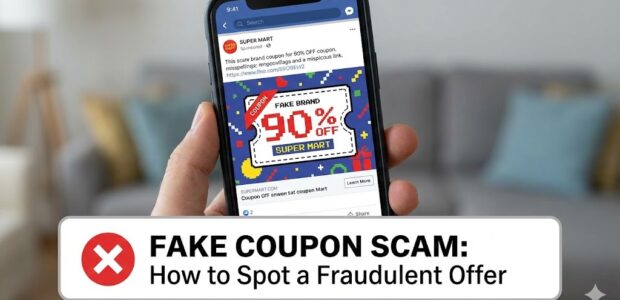
Facebook is a great place to chat, watch videos, and follow brands. But it is also a place where many scams appear. One of the most common scams today is the fake coupon offer.
These posts promise big savings. They say things like “Get $100 free,” “70% off today,” or “Claim your gift now.” Many people click because they want to save money.
Sadly, most of these offers are fake.
In this guide, you will learn how fake coupon scams work, how to spot them fast, and how to stay safe while shopping online.
What Is a Fake Coupon Scam?
A fake coupon scam is a post or ad that claims to give you a discount or free item. But the real goal is to:
-
Steal your data
-
Make you click ads
-
Trick you into paying fees
-
Send you to unsafe sites
You never get the real coupon. You only lose time, data, or money.
These scams often look like they come from real brands, but they do not.
Why Are Fake Coupons So Popular on Facebook?
Scammers use Facebook because:
-
Many people use it every day
-
Posts can be shared fast
-
Ads can target shoppers
-
It feels friendly and safe
When you see friends comment or like a post, it feels real. That trust helps scams spread fast.
Common Types of Fake Coupon Scams
Let’s look at the most common tricks.
1. “Limited Time Free Gift” Posts
These posts say:
-
“Only today”
-
“First 500 users”
-
“Claim before it ends”
They push you to act fast so you do not stop to think.
You click, and you go to a fake page.
2. Brand Copy Pages
Scammers make pages that look like real brands. They use:
-
The brand logo
-
Product photos
-
Similar page names
But the page is not real. The link leads to a fake site.
3. Survey for a Reward
These scams say you must answer a few questions to get the coupon.
After one survey, you are sent to another. Then another.
You never reach the reward.
4. Small Fee to Unlock Coupon
Some pages ask for a small payment, like $1 or $2, to “verify” you.
After you pay:
-
The coupon does not work
-
You may get more charges later
This is a big red flag.
5. Comment to Get the Link
Some posts say:
-
“Comment YES to get the deal”
-
“Reply to receive coupon”
After you comment, a bot sends you a link in chat.
That link often leads to scam pages.
How Fake Coupon Scams Trick You
Scammers use simple mind tricks.
Urgency
They say the deal will end soon. This makes you rush.
Big Rewards
Huge discounts sound too good to miss.
Trust Signals
They use brand logos and happy comments to look real.
Simple Steps
They say it takes “just one click” to get the deal.
All of this is made to stop you from checking facts.
Clear Signs a Facebook Coupon Is Fake
Here are strong warning signs.
The Link Does Not Match the Brand
If the post says it is from a big store, but the link looks strange, it is likely fake.
Real brands use their own site, not odd web names.
The Page Is New
Check the page details.
If it was made last week, it is not a real brand page.
Spelling and Grammar Errors
Many scam posts have:
-
Bad spelling
-
Odd sentences
-
Wrong brand names
Big brands do not post like this.
Comments Look Strange
Fake comments may:
-
Say only “Thanks” or “It worked”
-
Come from new accounts
-
Repeat the same words
This is often done by bots.
They Ask for Personal Info
Real brands do not ask for:
-
Card numbers
-
Phone codes
-
Full address for a coupon
This is a strong danger sign.
What Can Happen If You Click a Fake Coupon?
Not every click causes harm. But risks include:
Data Theft
Your email, phone, and name can be sold.
Spam Messages
You may get many ads and scam calls.
Hidden Charges
Small fees can turn into monthly charges.
Fake Product Orders
Some sites take money but never send items.
So it is best to avoid risky links.
What to Do If You Already Clicked a Scam
Do not panic. Do these steps.
Step 1: Close the Page
Do not fill out more forms.
Step 2: Do Not Pay Anything
If you did not pay yet, do not start now.
Step 3: Change Passwords
If you entered login info, change those passwords fast.
Step 4: Check Bank and Card Apps
Look for small charges you do not know.
Call your bank if you see any.
Step 5: Report the Post on Facebook
Click the three dots and report the ad or post as a scam.
This helps protect others.
How to Find Real Coupons on Facebook
Not all deals on Facebook are fake. You just need to be smart.
Follow Official Brand Pages
Look for pages with:
-
Long history
-
Many real posts
-
Clear contact info
Deals posted there are more likely to be real.
Click Only Links to Real Websites
The link should go to the brand’s real site, not a copy.
Check the web name before you trust it.
Use the Brand’s App or Email
Many brands post the same deals on:
-
Their app
-
Their email list
If the deal is real, you will see it there too.
Safer Ways to Save Money Online
You do not need Facebook coupons to save money.
Here are better options.
Use Trusted Coupon Websites
These sites collect real codes from stores.
They do not ask for surveys or fees.
Use Cash-Back Apps
Some apps give money back after you shop.
You get real value, not fake codes.
Wait for Big Sales
Holiday sales often beat any coupon.
Prices drop for everyone, no code needed.
Compare Prices
Sometimes another store sells the same item for less.
Price checks can save more than a coupon.
Why Facebook Struggles to Stop These Scams
Facebook tries to remove scams, but it is hard because:
-
New pages are made fast
-
Ads can be posted in minutes
-
Bots share scam posts widely
Even if one page is removed, many more appear.
This means users must stay alert too.
Why These Scams Keep Working
Scammers keep using fake coupons because:
-
People love deals
-
Many users trust social posts
-
Some people always click fast
Even if only a few people fall for it, scammers still make money.
Teaching Kids and Family to Stay Safe
Many scam victims are:
-
Older adults
-
Teens
-
New internet users
Share these simple rules:
-
Do not trust big free offers
-
Do not click strange links
-
Ask before buying online
A short talk can stop big problems later.
Expert Advice on Spotting Online Scams
Online safety experts agree on these points:
-
Real brands do not rush you
-
Real deals do not need secret steps
-
Real coupons do not need fees
If something feels odd, it likely is.
Trust your gut.
more article: Do Coupon Generators Work? The Truth About Online Code Tools
Quick Checklist Before You Click
Ask yourself:
-
Is this from a real brand page?
-
Does the link look normal?
-
Are they asking for data or money?
-
Is the deal too good to be true?
If you answer yes to any risk, do not click.
Final Thoughts: Stay Smart, Stay Safe
Fake coupon scams on Facebook are common and clever. They use big promises and fast action to trick people.
But once you know the signs, they are easy to spot.
Remember:
-
Real coupons come from real stores
-
Big rewards with no proof are risky
-
Your data is worth more than a small deal
Saving money is great. Losing money and data is not.
Choose safe ways to shop, and you will always win.